Coming Events and Recent News
In Memory of Derek Perkins, A.M.I. Mar. E.
Derek Perkins served in the merchant navy from the late 1940’s to the mid 1950’s for various UK shipping companies. Derek held a MOT First Class Marine Engineering certificate, Steam Ship and Motor Ship.

Canadian Coast Guard Welcomes 51 New Graduates Into Its Fleet
Released: June 4, 2022
Sydney, Nova Scotia – Since 1965, the Canadian Coast Guard College in Sydney, Nova Scotia, has been providing internationally recognized training to personnel of the Canadian Coast Guard.
Today, during its first in-person graduation ceremony since 2019, the College is bidding fair winds and following seas to 51 graduates from its Officer Training Program. These new Officers have completed the 45-month program, which is delivered in both official languages and offers a choice between Navigation and Marine Engineering streams.
These graduates have persevered through ongoing disruptions caused by the COVID-19 pandemic, and are now ready to serve Canadians by helping mariners in need, protecting marine ecosystems, and ensuring safe passage through Canada’s waterways.
In a year full of celebration for the Canadian Coast Guard’s 60th anniversary, the arrival of 51 new officers into our fleet is one more reason to celebrate. We extend sincere congratulations to all graduates, who will join their colleagues in making a positive impact in communities across Canada.
Quotes
“Today’s Coast Guard graduates are joining an esteemed organization that continues to serve Canadians with pride. You will serve an increasingly important role in protecting the environment and helping those in need. Congratulations on all that you have accomplished, and welcome to the Canadian Coast Guard. ”
– The Honourable Joyce Murray, Minister of Fisheries, Oceans and the Canadian Coast Guard
“The Canadian Coast Guard is proud to welcome these 51 new officers into our fleet. Having gone through the program at the Canadian Coast Guard College myself, I know how much hard work and perseverance each of you has put in. Congratulations and welcome aboard!”
– Mario Pelletier, Commissioner, Canadian Coast Guard
“On behalf of the entire College faculty, staff and administration, I would like to extend my sincere congratulations to all Graduates of the class of 2022. Your transformation from Officer Cadets to Officers over the last 45 months has been a pleasure to observe. I have the highest confidence that the future of the Canadian Coast Guard is in good hands for years to come. I know that you will serve your communities with integrity and make us all proud – well done!”
– Dena Richardson, Executive Director, Canadian Coast Guard College
Quick facts
- This year’s graduates will be posted to Canadian Coast Guard Regions across Canada:
- 15 graduates going to the Atlantic Region
- 18 graduates going to the Central Region
- 18 graduates going to the Western Region
- All Canadian Coast Guard College students receive free tuition, a training allowance, and free room and board.
- Graduates of the Officer Training Program receive a Bachelor of Technology (Nautical Sciences) Degree from Cape Breton University and a Diploma from the Canadian Coast Guard College. Navigation Officers receive a Transport Canada Watchkeeping Mate Certificate, and Marine Engineering Officers receive a Fourth Class Engineering Certificate from Transport Canada.
Associated links
Technical Presentation – Exploring the Big Blue with Remotely Operated Vehicles
C.I.MAR.E. VANCOUVER ISLAND BRANCH INVITES YOU TO JOIN THEM FOR AN INFORMATIVE WEBINAR
DATE: Thursday, June 16th, 2022
TIME: 19:00 Pacific (22:00 Eastern; 23:00 Atlantic, 23:30 NFLD)
Exploring the Big Blue with Remotely Operated Vehicles
Abstract:
The presenter, Lauren Hudson is an educator now working for Ocean Networks Canada (Canada’s premier oceanic data-gathering network off the coast of BC).
Her presentation will cover various aspects from a scientific and practical perspective. With her background in creating educational opportunities should make this evening’s presentation an interesting one.
Technical Presentation: Adapting to New Technology Insertion and Design Changes Through the Use of a Novel Design-Management Simulator
C.I.MAR.E. ATLATNIC BRANCH INVITES YOU TO JOIN THEM FOR AN INFORMATIVE WEBINAR
DATE: THURSDAY, April 21st, 2022
TIME: 12:15 Atlantic (8:15 Pacific, 11:15 Eastern, 12:45 NFLD)
Adapting to New Technology Insertion and Design Changes Through the Use of a Novel Design-Management Simulator
Abstract:
Many defence projects have incurred significant cost overruns and delays, with the causes attributed to program pressure, changing requirements, immature technology, under-estimation of risks, and the lack of organizational integration. Traditional practices and measures are unable to predict the impact of new technology and design changes. Moreover, there is not a practical approach or tool to help integrate multiple disciplines so as to better understand system and program complexity and the impact of changes. Understanding risks, potential changes and technologies through knowledge gain early in the design can help reduce costs and schedule delays. Furthermore, the use of set-based design and engineering principles can provide for a robust design that can better accommodate changes. Along with these principles, systems thinking, system dynamics, techno-socio-economic and cultural factors are considered in development of a novel design-management simulator. This simulator is presented through application of a case study on an advanced marine integrated power system. The simulator provides an integrated ‘big picture’ perspective not possible with the use of separate engineering and management models.
Speaker:
Ray Jonkers, PhD, PEng, PMP
During the past 17 years, Ray has held engineering positions in industry as a Program Performance Manager, Operations Manager, Transformation Manager, Central Engineering Manager and currently serves as a Consultant at Merlantec Management and Engineering Inc.
Prior to this, Ray completed 22 years with the Royal Canadian Navy as a Marine Systems Engineer, where he assumed management roles in maintenance, operations, project management, quality assurance, and test and trials.
Ray has a PhD in Systems Engineering, a Masters in Mechanical Engineering, and a MBA. Ray resides in Milford Station Nova Scotia with his wife, daughter, son and beloved Lab.
RSVP: dehughes09@gmail.com
Technical Presentation: Decarbonizing Marine Shipping Clean Fuels for a Greener Future
C.I.MAR.E. ATLATNIC BRANCH INVITES YOU TO JOIN THEM FOR AN INFORMATIVE WEBINAR
DATE: THURSDAY, March 17th, 2022
TIME: 12:15 Atlantic (8:15 Pacific, 11:15 Eastern, 12:45 NFLD)
Decarbonizing Marine Shipping Clean Fuels for a Greener
Summary:
Bud Streeter will present some of the findings from Clear Seas Centre’s ongoing research on reducing GHGs from marine fuels.
Abstract:
Replacing the current fossil fuels used in ships with cleaner alternatives could provide solutions to the challenge of decarbonizing marine shipping. Ship fuels manufactured using renewable electricity and made purely from water and the gases found in the atmosphere, are being proposed. These include Hydrogen, Ammonia, Methanol and Methane. Clear Seas’ ongoing research on reducing GHGs from marine fuels provides some valuable insights.
Speaker:
Bud Streeter,
Bud Streeter has spent over 50 years in the marine business. He is a graduate of the Canadian Coast Guard College and holds a First Class Engineering Certificate of Competency. He has served as an Instructor at the Canadian Coast Guard College, a Marine Inspector, Examiner and Manager with Marine Safety and as a Technical Director and Executive Officer with Marine Atlantic. He served as Director General Marine Safety during which time he was the head of Delegation to many IMO meetings. His most recent fulltime employment was with Lloyd’s Register where he held executive positions in the Americas. He retired from full time employment at the end of 2017.
He has served as a Board Member for Meridian Shipping Limited and for many Lloyd’s Register entities. He was appointed to the Canadian Advisory Council on National Security and served as a marine security advisor between 2005 and 2009.
Bud is a member of the board and Past Chair of the Clear Seas Centre for Responsible Marine Shipping, an independent research centre that promotes safe and sustainable marine shipping in Canada. He also serves as the Honorary President of the Canadian Institute of Marine Engineering (CIMarE). He is a recipient of the CIMarE’s Medal of Excellence.
RSVP Admin@cimare.ca
Technical Presentation Duel Fuel Technologies for 2 Stroke MAN B&W Engines
C.I.MAR.E. ST. LAWRENCE BRANCH INVITES YOU TO JOIN THEM FOR AN INFORMATIVE WEBINAR
DATE: TUESDAY, MARCH 8th, 2022
TIME: 12:00 Eastern (9:00 Pacific, 13:00 Atlantic, 13:30 NFLD)
Technical Presentation by MAN Energy Solutions – Duel Fuel Technologies
Abstract:
This presentation will cover the state-of-the-art technology in the design of Dual fuel MAN B&W 2 stroke engines. Special attention to the Methanol engine and the ongoing development of an Ammonia burning engine.
Today MAN B&W engines can operate on different fuels that are considered to be future fuels for the Marine Industry. A diesel technology based on the IC diesel engine principle makes it possible to keep the same high efficiency, up to 55%, and the same high power output.
The two stroke engines are the most used prime mover in ocean going ships today. In 2021, 30% of the contracted output from 2 stroke engines for ships were by Dual Fuel. The MAN B&W engines have a power range from 3 to 83 MW per engine and are based on a modular concept which makes it possible to retrofit the ME-C engine to operate with LNG, Methanol, LPG, Ethane and in near future Ammonia.
The different fuels mentioned have different characteristics which provide different challenges in the design process. The fuel injection components are dependent on the right choice of the materials and tailor made elastomers. For fuels without lubricating ability, such as Methanol, a special design of the fuel injection booster pumps and injection valves has been invented.
A complicated part of the design is to find the right injection pressure to the engine and into the combustion chambers. The fuel gas supply system is therefore optimized individually. Pressure and amount of the dual fuel to be delivered to the engine is based on the fuel specifics.
The engines still have to comply with IMO Annex Tier II and III and we also need to ensure that other harmful emissions in the exhaust gas are under control. The Ammonia engine has to be NOx compliant and the amount of Ammonia slip has to be minimized down to an insignificant level. Testing of this engine will begin this year.
Furthermore, N2O levels need to be 0 ppm as they are very harmful to the GHG. “Regulation for maximum level is not in place yet.”
In this presentation, we would like to introduce our different dual fuel technologies and the consideration of the safety / HAZID / HAZOP, reliability and availability that underlies the engine design.
Speaker:
Kjeld Aabo, MAN Energy Solutions
Director, New Technologies Sales and Promotion Two-stroke Marine
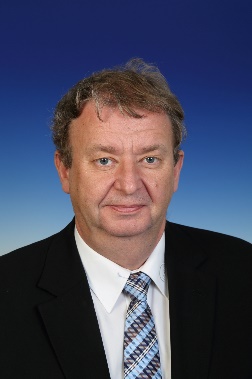
Kjeld Aabo holds a degree in mechanical engineering and a special diploma in marketing.
He joined MAN Diesel in the Stationary Installation Department in 1983. In 1992, he was appointed section manager in the Marine Installation Department and in 1994 he was appointed manager of the Marine Installation Department. In 2002, Kjeld Aabo took over the Engineering Services Department and was appointed Senior Manager. In 2005, he took over the Research Centre Department.
From November 2006, Kjeld Aabo was director of the department for Promotion & Customer Support and from March 2009 head of the Two-stroke Promotion department at the head office for two-stroke engines in Copenhagen, Denmark.
From 2011 to 2014, Kjeld Aabo took over a position in Brazil as head of MAN Marine and Offshore division.
After returning to Denmark in 2014 Kjeld Aabo is Director of new technologies in the Promotion and Sales department for two-stroke engines and GenSet engines.
Kjeld Aabo is Chairman of the CIMAC Heavy Fuel Working Group (WG), and member of the ISO 8217 Heavy Fuel Oil Working Group.
Historical Events
Webinar On the Radar: Digitalisation in Subsea Operations & Marine Assets.
The National Council extends an invitation from the Institute of Marine Engineering, Science and Technology webinar On the Radar: Digitalisation in Subsea Operations & Marine Assets.
As we continue to change, we will through our Web Site encourage participation in the marine community.
Register for a free online panel event, IMarEST On the Radar: Digitalisation in Subsea Operations & Marine Assets.
Taking place on Wednesday 23 June, our specialist panellists will discuss the use of digital twins in the imminent transition from fossil fuel to renewable energy. Looking at the digitalisation of marine and subsea assets, experts will also examine the transfer of skills that will be required for this transition to take place, taking knowledge from the oil and gas sector into the green energy space.
The event will be available for registrants to watch on-demand if unable to watch live.
You can find out more about our panellists, and register for free here: https://www.eventbrite.co.uk/e/imarest-on-the-radar-digitalisation-in-subsea-operations-marine-assets-tickets-153598734951
Technical Presentation: Wind Propulsion
C.I.MAR.E. ST LAWRENCE BRANCH INVITES YOU TO JOIN THEM FOR AN INFORMATIVE WEBINAR
DATE: TUESDAY, JUNE 8th, 2021
TIME: 12:00 Eastern (9:00 Pacific, 13:00 Atlantic, 13:30 NFLD)
WIND PROPULSION WITH GAVIN ALLWRIGHT and KONSTANTINOS M FAKIOLAS:
Abstract:
Overview of wind propulsion developments in the market and the potential for wind propulsion systems to help decarbonise commercial shipping. An introduction to the various technology systems and their attributes. Focusing on forecasts for development, recent installations and the pipeline for projects over the next 2-3 years. A discussion of the main drivers and barriers to the adoption and scaling of wind propulsion systems and wind assist ship propulsion (WASP). The following theme topics presented:
• The Wind potential in Oceans (5’)
• Available WASP technologies (5’)
• Principles of Thrust generation from WASP (10’)
• Ship Integration of Wind propulsion systems (10’)
• Regulatory developments (IMO, Class) (10’)
Speakers:
Gavin Allwright,
Secretary General, International Windship Association (IWSA)
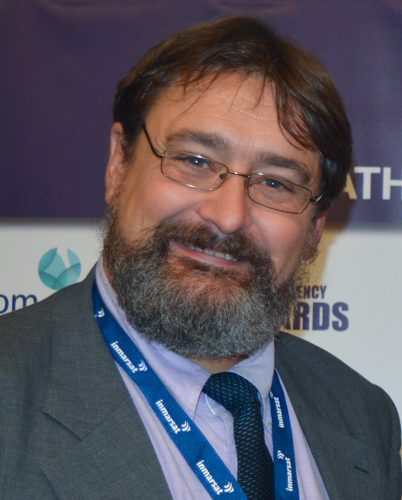 Gavin Allwright is the Secretary General of the International Windship Association (IWSA). www.wind-ship.org Established in 2014, this not-for-profit has grown to 130+ members from across the shipping industry and is working to promote and facilitate the uptake of wind
propulsion solutions in commercial shipping. Alongside his work as association secretary, he also leads the policy work stream, requiring regular attendance at IMO, EU and national government level meetings and sits on the stakeholders advisory committee for the MTCC network at the International Maritime Organisation (IMO). www.decadeofwindpropulsion.org
Gavin is also a non-executive board member for the World Wind Energy Association (WWEA), a work package leader on the EU Interreg Wind Assist Ship Propulsion (WASP) and advisor on various shipping decarbonisation projects. He is a regular guest lecturer at the UN World Maritime University (WMU) and holds a Masters degree in Sustainable Development, specialising in small scale sustainable shipping and logistics in developing countries and was an expert reviewer for the IPCC special report on 1.5C climate change.
Konstantinos M. Fakiolas,
Naval Architect & Marine Engineer
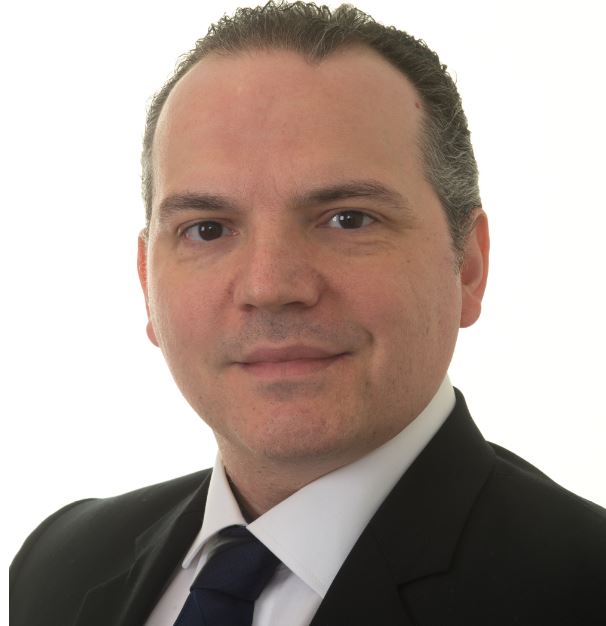 Konstantinos is a Naval Architect & Marine Engineer, graduate from the National Technical University of Athens (NTUA), with Master Thesis on Ship Hydrodynamics (CFD Analysis), and further post-graduate studies in Marine Technology and Ocean Science with focused specialization in energy efficiency of ships.
Involved in the Shipping Industry since the year 1998, working as a Surveyor on behalf of Flag Administrations, Naval Architect-Designer for Passenger/Ferry/Mega Yacht Ships, New buildings and Retrofit Supervisor and engineering Project Manager for RoRo-passenger and wet/dry/gas commercial cargo ships, working in Asia closely with Shipyards for custom designed energy efficient cargo ships and ship conversions for energy efficiency.
Since 2014 studying Wind propulsion technologies on ships, developing reference projects and participating in research projects such as WiSP JIP, being a member of the International Wind Ship Association. He is the Author of the 1st Industry Book about Wind propulsion for commercial ships, the ‘Wind
Propulsion Principles’.
Technical Presentation: Wartsila EEXI Engine Power Limitation Energy Efficiency Technology
C.I.MAR.E. ST. LAWRENCE BRANCH INVITES YOU TO JOIN THEM FOR AN INFORMATIVE WEBINAR
DATE: TUESDAY, SEPTEMBER 14th, 2021
TIME: 12:00 Eastern (8:00 Pacific, 13:00 Atlantic, 13:30 NFLD)
Wartsila EEXI Engine Power Limitation Energy Efficiency Technology
Abstract: Synopsis: Planned to come into action in 2023 the proposed amendments to the MARPOL convention requires ships to combine a technical and an operational approach to reduce their carbon intensity. This is in line with the ambition of the Initial IMO GHG Strategy, which aims to reduce carbon intensity of international shipping by 40% by 2030, compared to 2008. The technical requirement to reduce carbon intensity, based on a new Energy Efficiency Existing Ship Index (EEXI); and the operational carbon intensity reduction requirements is based on a new operational carbon intensity indicator (CII). The dual approach aims to address both technical (how the ship is retrofitted and equipped) and operational measures (how the ship operates). The attained Energy Efficiency Existing Ship Index (EEXI) is required to be calculated for every ship and in this webinar we will analyze the calculation and identify measures that will improve efficiency that will by extension improve the EEXI and CII.
Speaker:
 Mark Keneford
General Manager, Marine Solutions, Wartsila
Mark Keneford has been with Wartsila for 10 years. Mark is responsible for Wartsila Marine Solutions sales across Canada and works with shipowners, design companies, shipyards and various regulatory and other marine stakeholders in addressing solutions to meet their challenges.
Contact: mark.keneford@wartsila.com, Mobile +1 514 247 5940
Technical Presentation: The Use of Flexible Couplings
C.I.MAR.E. ST LAWRENCE BRANCH INVITES YOU TO JOIN THEM FOR AN INFORMATIVE WEBINAR
DATE: TUESDAY, MAY 11th, 2021
TIME: 12:00 Eastern (9:00 Pacific, 13:00 Atlantic, 13:30 NFLD)
THE USE OF FLEXIBLE COUPLINGS
Abstract: What you need to know about couplings
Although a relatively small part in a driveline, a flexible coupling is a very important part. So why do you need a coupling in your driveline, and why is it so important to make sure the correct model is selected.
We will take a general look at the selection process and what details you have understand to make sure your propulsion system works flawlessly.
Speaker:
 Eric de Leeuw van Weenen
Director of Business Development
eweenen@vulkanusa.comShort bio:
Started work at the Damen Shipyards head office as purchasing manager for all the Tugs and Workboats.Degree in mechanical engineering from the University of Rotterdam.
Between VULKAN and Damen spend some time at Exalto, a supply company for yacht builders.
In 2007, joined VULKAN sales in the Netherlands, working with many types of applications and customers, like the large dredgers at IHC, or complete drivelines for thruster applications at ZF.
Moved with the family to Florida in 2011 to work together with our outside sales force to develop and grow our marine and industrial business.
As son of a Captain, always said I wanted nothing to do with ships, but I guess there is no flying from fate 😊
Technical Presentation: OCEANOGRAPHIC BUOY MOORINGS
C.I.MAR.E. VANCOUVER ISLAND BRANCH INVITES YOU TO JOIN THEM FOR AN INFORMATIVE WEBINAR
DATE: THURSDAY, MARCH 18th, 2021
TIME: 19:00 Pacific (22:00 Eastern, 23:00 Atlantic, 23:30 NFLD)
OCEANOGRAPHIC BUOY MOORINGS
This coming Thursday, the 19th of March, Ryan Nicoll will give a presentation on how the mooring systems of deep-ocean oceanographic buoys are developed, along with a comparison of predicted vs. actual mooring loads. Oceanographic moorings are critical to our collective ability to measure and understand oceanographic processes. The moorings locate buoys in all water depths, and must survive the effects of wind, currents, and waves. Development and deployment of these buoys is critically dependent on their mooring systems.
The mooring systems, in turn, are site-specific to the buoys’ location, and the engineering behind the mooring systems are a specialty of DSA Ocean, which Ryan founded.
Technical Presentation – FUTURE TECHNOLOGY and PRESERVING LIFE at SEA
C.I.MAR.E. ATLANTIC BRANCH INVITES YOU TO JOIN THEM FOR AN INFORMATIVE WEBINAR
DATE: THURSDAY, MARCH 11th
TIME: 18:00 AST (17:00 EASTERN, 14:00 PACIFC, 18:30 NFLD)
FUTURE TECHNOLOGY and PRESERVING LIFE at SEA
A presentation by the Future Technology Panel of the International Maritime Rescue Federation
For thousands of years humankind has had a beneficial relationship with the world’s oceans, lakes, and rivers, for food, transport, and leisure. However, this relationship has not been without cost, the risk of injury and death has always been present, over 300,000 people drown annually.
For the past two centuries rescue organizations have responded to those in distress on the water. Over one hundred of these maritime rescue organizations from 54 countries worldwide are members of the International Maritime Rescue Federation (IMRF), an NGO at IMO. The IMRF facilitates the sharing of experience, expertise, and knowledge among its member organizations in order to save lives, and to protect rescue personnel worldwide.
The Future Technology Panel (FTP) of the IMRF is a group of member organizations which meet to share information and assist each other with the evaluation and implementation of new technologies. The projects cover many areas, large and small, such as the application of Remotely Piloted Air and Marine Systems, autonomous systems, electronic alerting and locating technologies, small craft navigation, crew safety and health.
This presentation outlines many of these technologies, the processes to identify and evaluate these technologies, the possible benefits, and pitfalls, the impact on the public safety, and the impact on the safety of rescue personnel. The FTP members evaluate technologies which have near term application, and those which look further into the future.
This presentation will be of interest to anyone who is concerned with Maritime Safety. Contributors: Search & Rescue Organizations & related firms in Australia, Canada, Germany, Ireland, Norway, South Africa, Sweden, & the United Kingdom.
Presenter
John W. Dalziel, M.Sc., P.Eng., IMRF Supporter.
Adjunct Professor, Industrial Engineering, Dalhousie University, Halifax.
John Dalziel is a naval architect involved in the marine industry for the past half century. In 1969 he sailed through the North West Passage on the Canadian icebreaker John A Macdonald, along with the American tanker Manhattan. He has worked with the Canadian Government and industry, primarily in ship construction & repair supervision and safety inspection. He has been involved with maritime rescue organizations for many years. As a university student in 1971 he worked for the Royal National Lifeboat Institution in Britain in their technical office.. For the five years he has been involved with the Future Technology Panel of the International Maritime Rescue Federation. He has spoken internationally on maritime safety and on the application of modern technologies to maritime rescue.